
How to Save on Heating and Cooling Costs in Massachusetts

Jan 24
5 min read
Massachusetts homeowners face long winters, humid summers, and constant temperature changes throughout the year. Because of this, heating and cooling systems work harder here than in many other states — and that often leads to higher energy bills.
The good news? Understanding how your HVAC system works — and where energy is actually being used — can help you reduce costs without sacrificing comfort.
Where Your Energy Money Goes
One of the biggest surprises for homeowners is how much of their energy bill comes from heating and cooling.
Your Energy Bill Breakdown

As shown in the infographic above, heating and cooling account for about 45% of total household energy use. That’s more than appliances, lighting, or electronics combined. The average American family spends over $2,000 per year on energy, and nearly half of that cost is tied directly to HVAC performance.
Understanding Heat Flow and Temperature Difference
Heat naturally moves from warmer areas to cooler areas. In winter, heat escapes from your home to the cold outdoors. In summer, outdoor heat pushes its way inside.
Your HVAC system’s job is to control this heat flow — but when insulation is poor or systems are inefficient, energy is lost faster than it can be managed. The greater the temperature difference, the harder your system must work.
This is why sealing, insulation, and proper system design are just as important as the equipment itself.
Cooling 101: How Air Conditioning Really Works
Many people think air conditioners simply “make air cold,” but cooling is actually a heat-removal process.

As shown in the diagram:
Warm indoor air is pulled into the system
Heat is absorbed and transferred through coils
Cooled air is circulated back into the home
Moisture is removed, helping control humidity
When airflow is restricted by dirty filters or clogged coils, the system runs longer and uses more energy. Excess humidity also forces cooling systems to work harder, increasing costs.
How Conditioners Cool the Air

Heating 101: Why Heating Costs So Much in Winter
Heating is typically the largest energy expense for Massachusetts homeowners.
Modern heat pumps and high-efficiency systems don’t create heat — they move heat from one place to another. This makes them far more efficient than older systems, especially in New England climates.
However, heating systems lose efficiency when:
Homes are poorly insulated
Units are incorrectly sized
Maintenance is skipped
Even the best equipment can’t perform well if heat is constantly escaping the home.
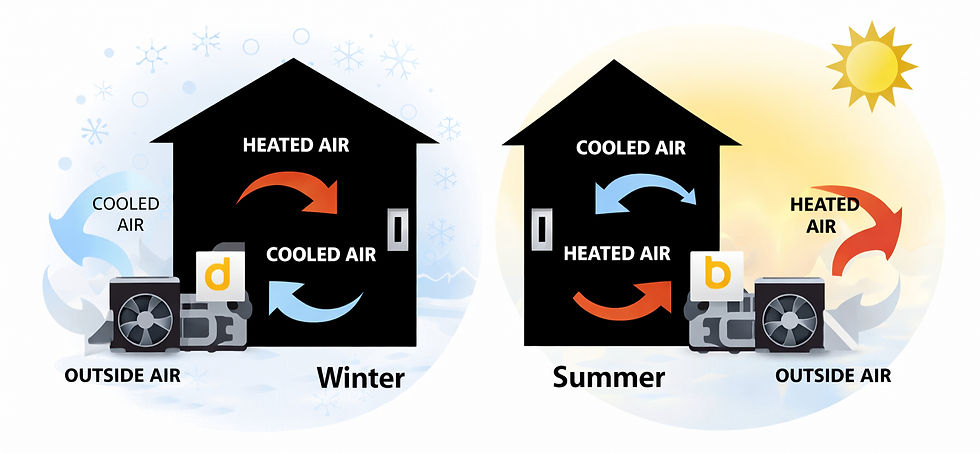
Ventilation 101 : The Hidden Factor in Energy Efficiency
Ventilation plays a critical role in indoor comfort and energy efficiency.
Proper ventilation:
Removes stale air
Controls humidity
Reduces indoor pollutants
Without adequate ventilation, heating and cooling systems must work harder to maintain comfortable temperatures. Balanced airflow helps systems run more efficiently and improves indoor air quality at the same time.

Proven Ways to Keep Energy Costs Low
Lower energy bills don’t come from one single fix — they come from a combination of smart improvements:
In Massachusetts, where HVAC systems run heavily in both winter and summer, operating an older or inefficient unit can significantly increase annual energy costs. Most HVAC systems have an average lifespan of 10–12 years, and as they age, efficiency drops while energy usage rises.
Proper Sealing and Insulation
Even the most efficient HVAC system will struggle if conditioned air is escaping from the home. Gaps around windows, doors, attics, and wall penetrations allow heated or cooled air to leak out, forcing the system to work harder to maintain indoor temperatures. Proper sealing and insulation help retain energy, reduce system runtime, and improve overall comfort.
Regular HVAC Maintenance
Routine maintenance is essential for keeping energy costs under control. Systems that are not properly maintained often run longer cycles, consume more electricity, and wear out faster. Replacing air filters regularly, cleaning components, and scheduling professional service before peak heating or cooling seasons can reduce energy consumption and prevent costly repairs.
Efficient Operation
Small daily habits also play a role in energy efficiency. Setting thermostats appropriately when the home is unoccupied, keeping doors and windows closed while systems are running, and managing indoor humidity all help HVAC systems operate more efficiently. Installing a programmable or smart thermostat can save homeowners up to $180 per year in energy costs by optimizing heating and cooling schedules automatically
Lowering energy costs often starts with clear goals ->
Reducing overall energy consumption
Replacing aging or inefficient HVAC equipment
Addressing comfort issues caused by improperly sized systems
When HVAC systems are properly sized, well-maintained, and supported by good insulation and sealing, homeowners can see meaningful reductions in energy bills without sacrificing comfort.
Choosing the Right HVAC System Size Matters
Bigger is not better when it comes to HVAC systems.
A system that’s too large cycles on and off too quickly
A system that’s too small runs constantly

Both situations lead to higher energy bills, uneven temperatures, and shorter system lifespan. Proper sizing ensures comfort, efficiency, and long-term reliability.
Efficiency Is the Way Forward
Higher-efficiency HVAC systems use less energy to deliver the same level of comfort. For Massachusetts homeowners, upgrading to modern, energy-efficient equipment can reduce heating and cooling costs by 30–50% over time.
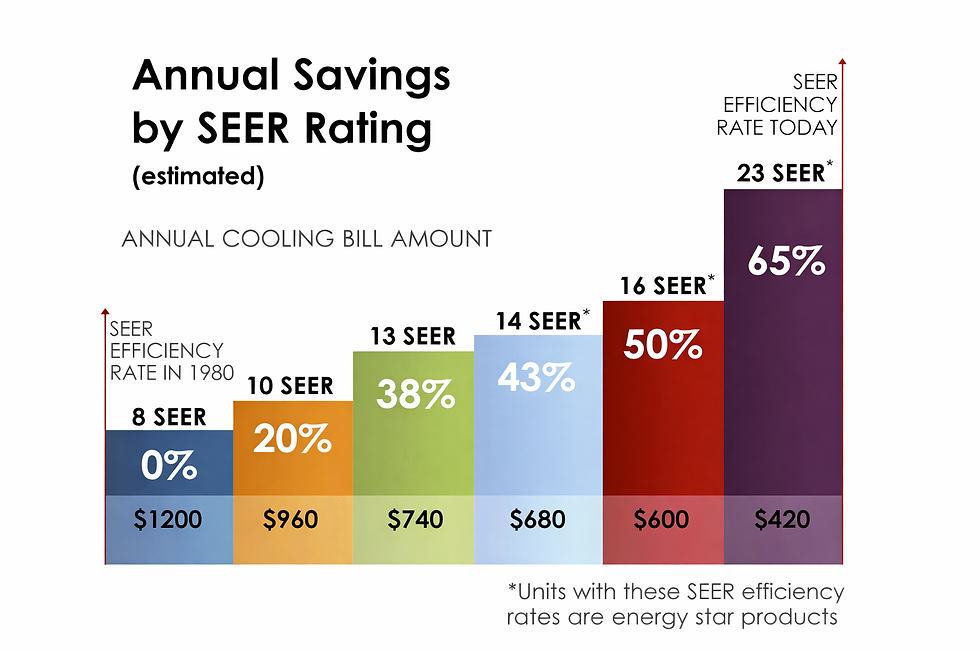
But what actually makes a system “efficient”? One of the key factors is the SEER rating.
What Is SEER Rating?
SEER (Seasonal Energy Efficiency Ratio) measures how efficiently an air conditioning or heat pump system operates over an entire cooling season.
In simple terms:
Higher SEER = lower energy usage
Lower SEER = higher monthly bills
For example:
Older systems may have a SEER rating of 8–10
Modern high-efficiency systems often range from 16 to 23+ SEER
This means a newer system can provide the same cooling while using significantly less electricity, which directly translates into lower energy bills year after year.
How SEER Impacts Your Energy Savings
The infographic above shows how higher SEER ratings can dramatically reduce annual cooling costs. Homeowners upgrading from an older system to a high-SEER unit often see:
Noticeably lower summer electric bills
More consistent indoor temperatures
Reduced strain on HVAC equipment
Longer system lifespan
Over time, these savings help offset the initial investment — making efficiency upgrades a smart long-term decision.
Energy-Efficient Systems = Smarter Investment
Modern energy-efficient HVAC solutions, including high-SEER heat pumps and mini-split systems, offer multiple advantages:
Lower heating and cooling costs
Improved indoor comfort
Quieter operation
Reduced maintenance needs
Eligibility for Massachusetts rebates and incentives
While the upfront cost may be higher, the combination of energy savings, improved comfort, and available rebates makes efficiency-focused upgrades especially attractive for New England homes.
Why Proper System Selection Matters
Efficiency isn’t just about SEER numbers. An improperly sized or poorly installed system can waste energy — even if it has a high efficiency rating.
At Top Climate, we evaluate:
Home size and layout
Insulation quality
Existing ductwork (or lack of it)
Heating and cooling needs specific to Massachusetts weather
This ensures your system operates at peak efficiency and delivers real savings — not just on paper.
Need Help Reducing Your Energy Bills?
At TopClimate, we help homeowners across Massachusetts improve comfort while lowering energy costs through smart, efficient HVAC solutions.
Our services include:
HVAC maintenance and repairs
Mini-split heat pump installation
Energy-efficient system upgrades
Guidance on rebates and incentives
TopClimate — Reliable Comfort. Smarter Energy Use.
Contact us today to schedule a consultation and start saving on heating and cooling costs !
Learn more at www.top-climate.com


Comments