

Why Is My Electric Bill So High With a Heat Pump? (MA Checklist)
A higher winter electric bill after a heat pump is partly normal. What is not, six checks you can do yourself, and how to get the Massachusetts heat pump rate.
The first cold month after a heat pump goes in, the electric bill arrives and it is bigger than anything you have paid before. Before you panic, let's walk through what might be happening.
The short answer: a higher electric bill is expected. A heat pump moves your heating from the oil, propane or gas bill onto the electric bill, so that one bill rises even when the total cost of heating your home falls.
What is not normal is a system that uses far more electricity than it should. That usually comes down to a setting, backup heat running when it shouldn't, or a fault a technician can find. Here is how to tell which, and how to get the lower winter rate Massachusetts now offers heat pump homes.
The short version
- Your heating moved onto the electric bill. Judge the total cost of heat, not the electric bill on its own.
- Hold one steady temperature in Heat mode. Overnight setbacks and Auto mode tend to cost more, not less.
- Electric backup heat turns a kilowatt-hour into far less heat than a heat pump does. It should only run when needed.
- Low refrigerant or weak airflow can push energy use up by a fifth or more. That needs a technician.
- National Grid, Eversource and Unitil customers can get a winter heat pump rate. Light plant customers can't.
Is a higher electric bill normal after you get a heat pump?
Yes, and it surprises almost everyone. Unless you heated with electric baseboard before, a heat pump will raise your electric bill.
If you heated with oil or propane, though, what you save on fuel should outweigh the extra electricity. So the fair comparison is this winter's electric bill against last winter's electric bill plus the fuel deliveries.
Delivery charges add to the jump. Most of the delivery charge in Massachusetts is billed per kilowatt-hour, so it rises with your usage.
Natural gas homes are the exception. A 2025 study found that at standard electric rates, just 27% of Massachusetts homes heated with gas would cut their bills with heat pumps. Homes on oil, propane or electric resistance heat came out much better.
Why does the bill keep climbing into January?
Two things rise together in a New England winter: how much heat your home needs, and what each kilowatt-hour costs.
Heat first. Cold is measured in heating degree days, and a colder month has more of them. A January bill should be higher than a November one even when nothing is wrong.
Price second. National Grid's variable Basic Service price for Massachusetts homes is 16.204 cents per kWh for November 2026, 18.477 cents for December and 20.086 cents for January 2027. That is the supply part alone, before delivery.
How much electricity does a heat pump use in a Massachusetts winter?
More than most people expect. A field study backed by the Massachusetts Clean Energy Center metered cold-climate heat pumps in 43 Massachusetts and New York homes. Over the 2020 to 2021 season they used an average of 4,833 kWh for heating alone.
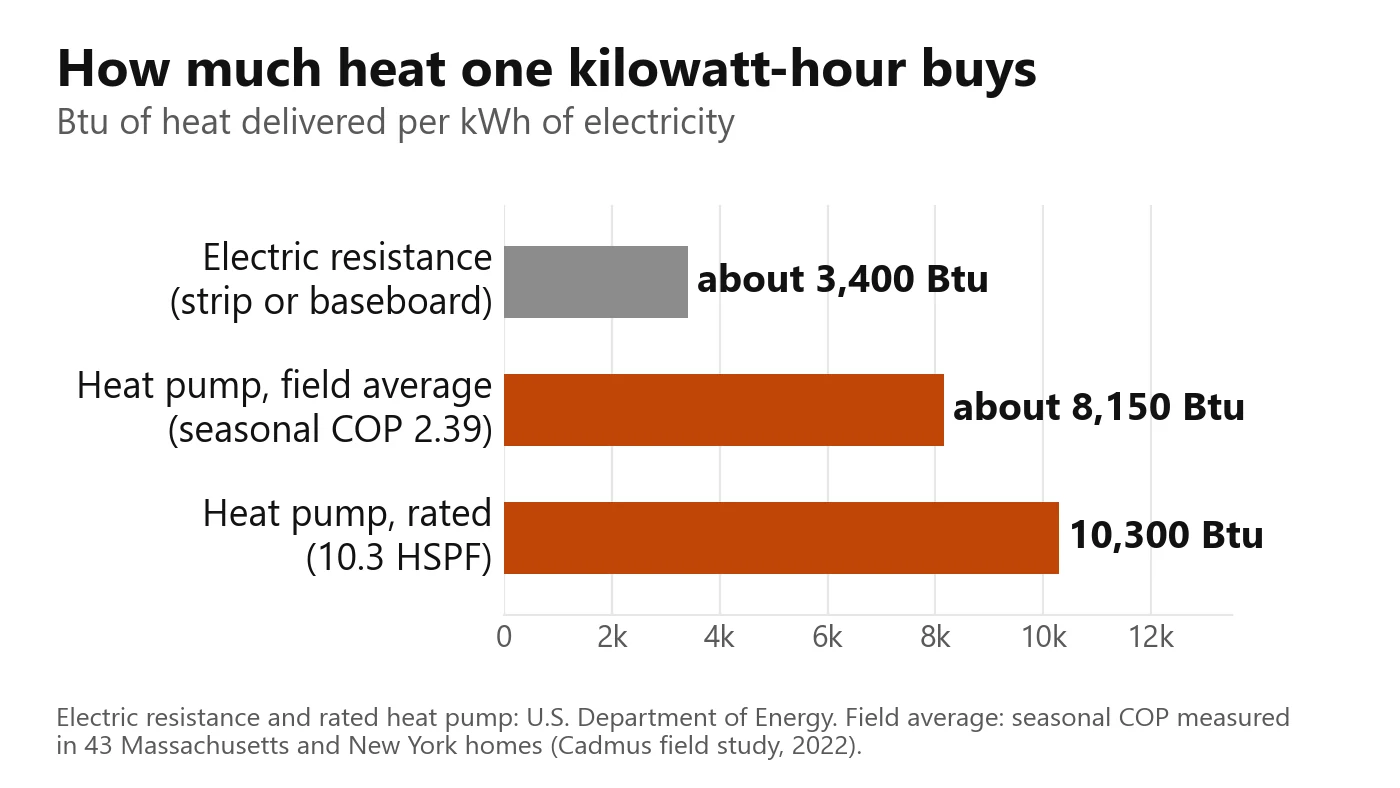
Across the season those systems delivered 2.39 units of heat for every unit of electricity. Ductless single-zone systems did best. Multi-zone systems with more than three indoor heads did worst, possibly because some zones were oversized.
That ratio is the whole point of a heat pump, and it is the thing that slips when something goes wrong.
What can you check yourself before calling anyone?
1. Compare kilowatt-hours, not dollars
Prices change month to month. Put this winter's kWh beside the same month last year, and remember that a colder month needs more heat. Some utilities print degree days on the bill, which makes the comparison fairer.
2. Hold one temperature
Heat pumps work best holding a steady temperature. Turning them down overnight makes them work harder to recover, and short setbacks like that do not save money. The Department of Energy calls a moderate, steady setting the most cost-effective way to run one.
3. Use Heat, not Auto
In Auto, a mini-split can start cooling on a sunny winter afternoon and heat again at night. Leave it in Heat all season.
4. Find out when your backup heat runs
Many ducted heat pumps have electric strips for backup. The Department of Energy says many thermostats are wired to bring those strips on whenever the setting changes by more than 3°F, whatever the weather outside. If Aux or Emergency heat shows often, read what aux and emergency heat mean and ask about an outdoor lockout.
5. Clean the filters
Rinse or vacuum the indoor filters whenever they look dusty or the filter light comes on. In federal lab tests, cutting a heat pump's indoor airflow in half lowered its efficiency by more than 30%.
6. Keep the outdoor unit clear
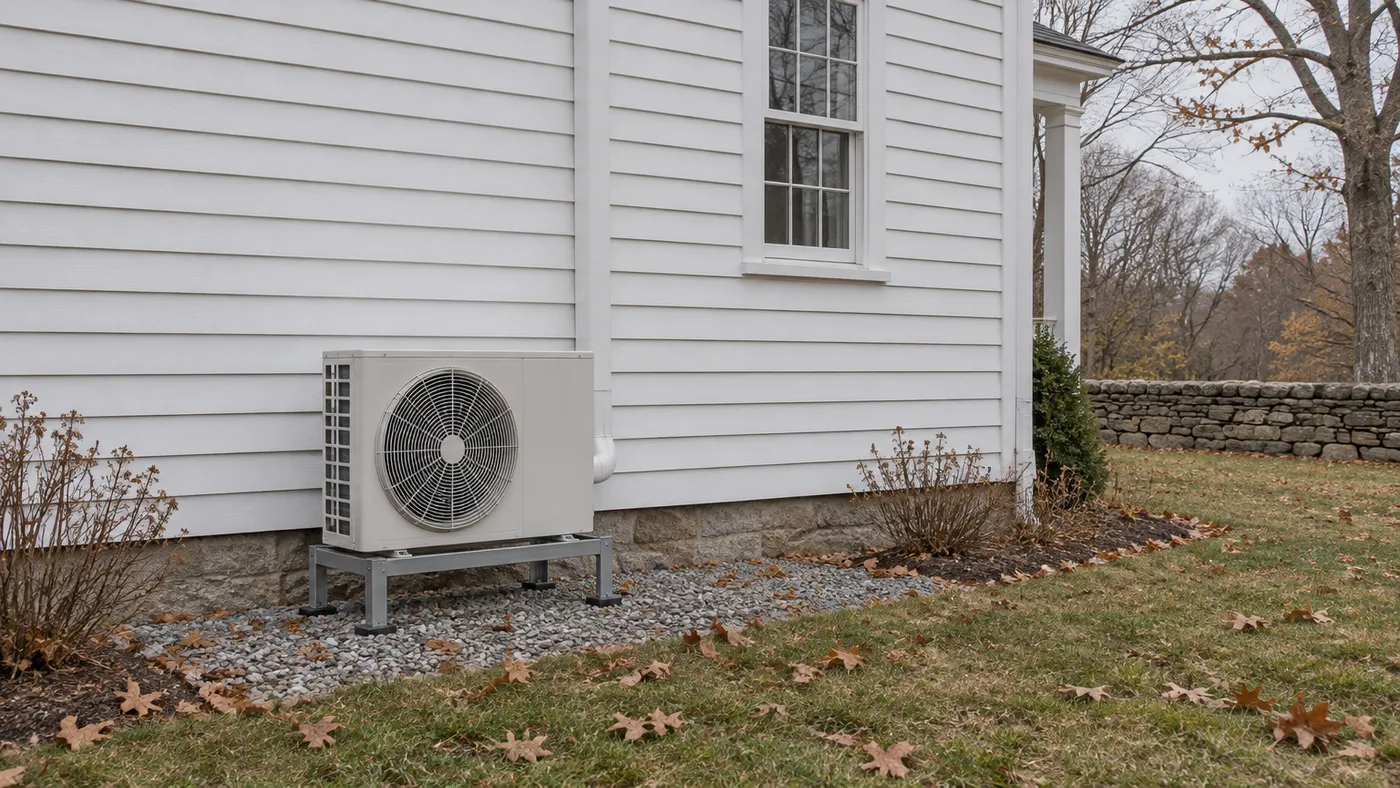
The outdoor unit pulls heat from the air around it. Keep snow drifts, leaves and shrubs away from it all winter.
When does a high bill mean something is wrong?
If usage is still far above last winter's after all of that, call a technician. Three faults are common, and none of them shows on the thermostat.
Low refrigerant. Split systems are charged with refrigerant on site. Federal research on a ducted heat pump found that running 30% short on refrigerant can raise yearly energy use by 17 to 23%.
Backup heat that runs too often. The Department of Energy calls the controls that keep strip heat off when it isn't needed "one of the most commonly violated installation practices for heat pumps."
Poor airflow or leaky ducts. Both are on the Department of Energy's list of common heat pump problems, and both make the system work harder for the same heat.
A technician can measure the refrigerant charge and the airflow and check how the backup heat is wired.
Usage still high after these checks? Book a heat pump repair visit
How do you get the Massachusetts heat pump rate?
Massachusetts now has a seasonal heat pump rate. From November 1 to April 30, it lowers the delivery charge on all the electricity your home uses, not only the heat pump's share.
For National Grid customers last winter, the base distribution charge dropped from $0.06677 to $0.02440 per kWh. From November 1, 2026, regulators also cut National Grid's transmission charge for heat pump homes from $0.055 to $0.02 per kWh, worth another $16 to $21 a month for a home using 600 kWh.
National Grid puts the savings for eligible residential customers at $70 to $141 a month, November through April. State regulators estimated about $540 for an average heat pump household over the winter.
You may already be enrolled. If your heat pump came with a Mass Save rebate since 2019, your utility enrolls you automatically, though National Grid notes it can take 6 to 8 weeks after the rebate is paid. If you got the smaller $250-per-ton rebate or installed without Mass Save, apply on your utility's website.
Partial-home systems count. Ducted and ductless heat pumps qualify even if they heat only part of the house, but one used only for air conditioning does not. Sign up before your November billing cycle ends and the rate covers the whole November bill.
Town aggregation customers qualify too, because the discount is on the delivery side of the bill.
What if your power comes from a town light plant?
Then the heat pump rate does not apply. Customers of municipally owned electric companies, such as the light plants in Peabody and Marblehead, are not eligible.
Light plants run their own programs instead. Peabody Municipal Light Plant customers can get a no-cost home energy audit through NextZero, which also offers a heat pump assessment to Marblehead's light department customers.
Rebates differ by town too. Here is how heat pump rebates work in Mass Save and light plant towns.
Frequently asked questions
Is it cheaper to leave a heat pump on all the time?
Usually, yes. Heat pumps run most efficiently holding one steady temperature, and turning them down for short periods, like overnight, does not save money. Some thermostats designed for heat pumps can make setbacks pay by keeping backup heat off.
Should I switch to emergency heat to save money?
No. Emergency heat runs the backup heat on its own, which on many ducted systems means electric resistance strips. Those give about 3,400 Btu per kWh, while a heat pump gives two to four times more heat for the same electricity. Use it only if the heat pump itself has stopped working.
Does the heat pump rate apply to mini-splits?
Yes. Ductless mini-splits used to heat the home qualify, even if they heat only part of the house. Heat pumps used only for air conditioning, and heat pump water heaters that do not also heat the home, do not qualify.
Can sealing drafts lower my heat pump bill?
Yes. Mass Save's no-cost Home Energy Assessment looks for insulation and air sealing work, which Mass Save says can lower heating and cooling costs by up to 20%. If a light plant serves your town, ask it about its own audit, as Peabody's customers can.
Heat pump bill higher than it should be?
Top Climate repairs and maintains heat pumps and mini-splits across Salem and the North Shore, 24/7. Estimates are free and on site.
Read more
 Heat Pump Not Heating or Blowing Cold Air? What to Check FirstHeat pump or mini-split blowing cool air this winter? See what normal defrost looks like, five checks to do yourself, and when to call a technician.
 Do Mini-Splits Work in Cold Weather? A Massachusetts Winter GuideCan a mini-split heat a Massachusetts home in January? What a cold-climate rating means, how to size one for heat, and when to keep backup heat.
 Are Heat Pumps Worth It in Massachusetts? The North Shore MathOil at $6 a gallon changes the math. What heat costs from a heat pump against oil, propane and gas, and the 2026 rebates by North Shore town.