

Do Mini-Splits Work in Cold Weather? A Massachusetts Winter Guide
Can a mini-split heat a Massachusetts home in January? What a cold-climate rating means, how to size one for heat, and when to keep backup heat.
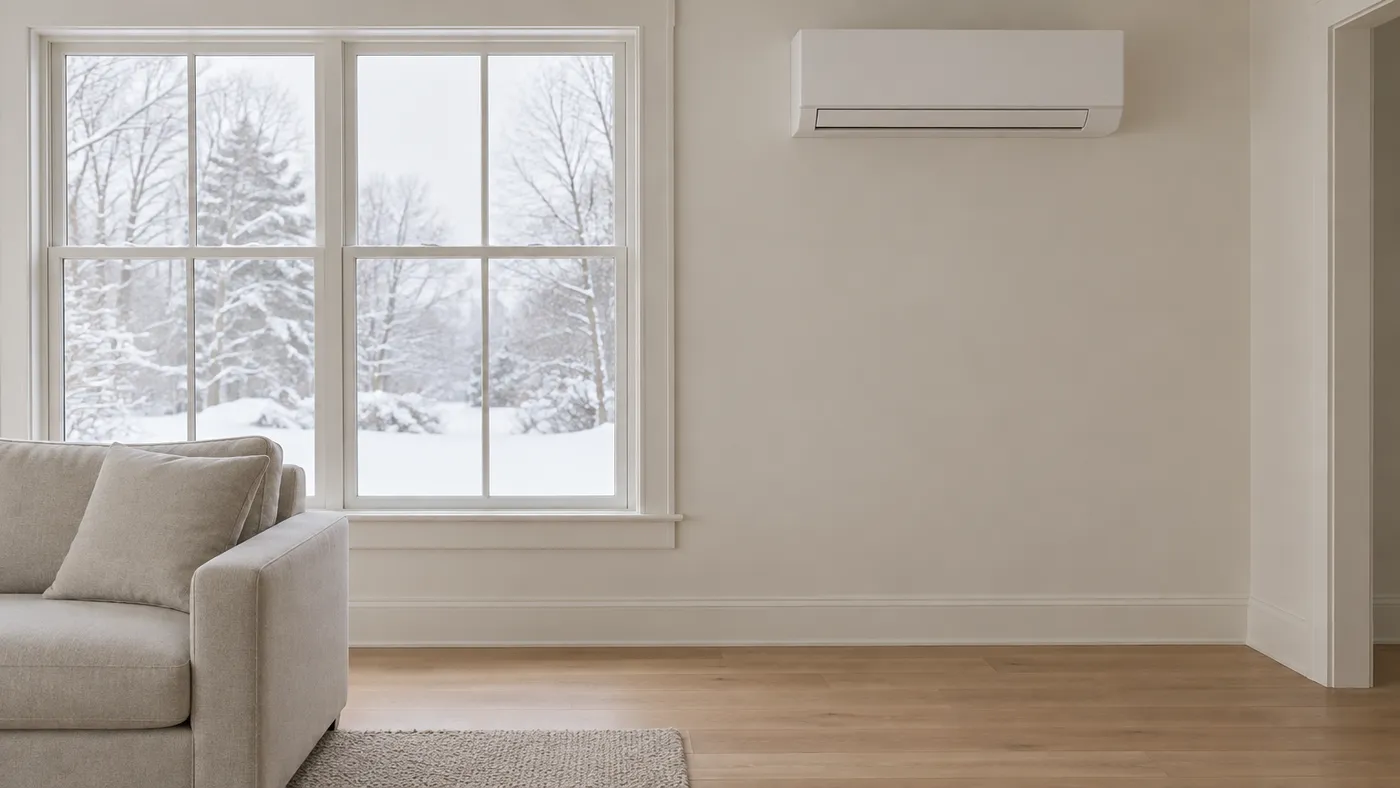
It's a January night on the North Shore, the wind is coming off the water, and you're wondering whether that slim unit on the wall can really keep the house warm.
The short answer: yes, a mini-split can heat a Massachusetts home through the winter, if it is a cold-climate model and it was sized for heating, not just for summer cooling. A standard rating says nothing about how a unit heats below 17°F, so with an ordinary model you are guessing.
Here is how to tell the difference, how much heat to expect on the coldest nights, and when you still want a backup.
The short version
- Look for a model that meets the cold-climate specification: it is tested and reported down to 5°F.
- Boston's coldest design temperature is under 8°F, so the 5°F numbers are the ones that matter here.
- Size it for your heating load, not your cooling load, using a proper load calculation.
- A boiler or furnace can stay as a backup, set a few degrees lower than the heat pump.
- Once installed, leave it on in Heat mode all winter and keep the outdoor unit clear of snow.
How cold does it get here, and why does 5°F matter?
Heating systems are sized for a design temperature: a cold day that is rare, but not freak weather. For Boston, that figure is 7.7°F. Only 0.4% of the hours in a typical year are colder than that.
That is why 5°F is the number to look at. The cold-climate heat pump specification, written for efficiency programs in cold regions, asks manufacturers to report how much heat a unit delivers at 5°F. That test point sits close to Boston's design temperature. Colder nights do happen, and a good plan says what covers them.
What makes a mini-split a cold-climate heat pump?
A cold-climate heat pump is one built and tested to keep heating efficiently in real winter weather. The cold-climate specification is the yardstick written for climates like ours, and it asks for three things.
A variable-speed compressor. It ramps up and down instead of switching on and off, so it can run gently on a mild day and hard on a cold one.
Efficiency at 5°F. At full output and 5°F outside, the unit must still deliver at least 1.75 units of heat for every unit of electricity it uses (a COP of 1.75). Ductless models also need an HSPF of at least 10.
Published cold-weather numbers. The manufacturer reports heating capacity at 47°F, 17°F, 5°F and the lowest temperature it lists. The ordinary HSPF rating stops at 17°F, which is why a sticker alone cannot tell you how a unit copes with a Massachusetts cold snap.
Meeting the specification does not make a model right for every home, though.
How much heat does a mini-split lose when it gets colder?
Some, and how much depends on the model. A heat pump pulls heat out of the outdoor air, and the colder that air gets, the harder the compressor has to work for the same output. Meanwhile your house needs more heat, not less.
Here is one real example: a 5-ton multi-zone outdoor unit from one of the brands we install, announced in April 2026, is rated at 100% of its heating capacity at 5°F and 80% at -13°F. At -24°F a built-in lockout stops it from heating.
Today's cold-climate heat pumps can handle -15°F and below, but every model has its own curve. Ask for the extended performance table of the exact unit you are offered.
So the honest question is not whether a mini-split works in the cold. It is whether this model, at this size, covers your house on a 5°F night.
How do you check a mini-split for winter before you buy?
1. Ask if the model meets the cold-climate specification
Models that meet the cold-climate specification are listed publicly. If yours is not on it, ask what it delivers in the cold.
2. Ask for its heating capacity at 5°F
The extended performance table shows how much heat that exact outdoor unit delivers at low temperatures. That number has to cover your house.
3. Ask for a heating load calculation
The size should come from a proper heating load calculation for your house. Fix big air leaks and insulation gaps first, because a tighter house needs a smaller system.
4. Decide what covers the coldest nights
Either the heat pump carries the whole house at the design temperature, or a boiler, furnace or other heat stays as backup. Settle that before the size is chosen.
5. Plan where the units go
Bigger is not better for a small bedroom: oversized equipment cycles on and off too much and runs less efficiently. Outside, the unit needs to sit raised off the ground with room around it for snow.
Can a mini-split be your only heat?
Yes, if it is designed that way. When the heat pump replaces the old system, there are two ways to size it.
Sized to carry the whole house. The heat pumps deliver 100 to 115% of the home's heating load at the design temperature, with no backup needed.
Sized a little smaller, with a small backup. The heat pumps cover 75 to 85% of the load, and just enough supplemental heat covers the rest on the coldest nights.
There is also a third route: the mini-splits do most of the heating and the boiler or furnace stays, its thermostat set 4 to 10°F lower, so it runs only when the heat pump cannot keep up.
One trap: when the heat pump satisfies the house, the boiler barely runs, and a basement it used to warm can get cold enough to freeze pipes. Heat tape, a backup thermostat down there, and air sealing help. Planning a system? See our heat pump installation page.
How do you run a mini-split through a Massachusetts winter?
Mostly by leaving it alone. Up the coast in Maine, homeowners have installed more than 200,000 heat pumps, and the rule for running one is the same there as here: set it and forget it.
Leave it on in Heat mode, not Auto, at one comfortable temperature. Turning it down at night makes it work harder to catch up, so turn it down only if you will be away for more than 24 hours.
Outside, keep at least two feet clear around the unit and dig it out after a storm, the same as your car. Our winter HVAC checklist covers getting a heat pump ready before the first snow.
If it ever blows cool air on a cold evening, it is usually the defrost cycle. Our guide to a heat pump not heating walks through what is normal and what needs a technician.
Planning a mini-split for winter heat? Here is how our installations are scoped and sized. Mini-split installation
Frequently asked questions
At what temperature does a mini-split stop heating?
It depends on the model. Today's cold-climate heat pumps can handle -15°F and below. One new multi-zone unit, for example, is rated at 80% of its capacity at -13°F and locks out at -24°F. Ask for the exact model's numbers.
Should I leave my mini-split on all the time in winter?
Yes. Heat pumps run most efficiently holding one steady temperature, so set it in Heat mode and leave it. Turn it down only if you will be away for more than 24 hours.
Can mini-splits heat a whole house in Massachusetts?
They can, when the system is designed for it: enough zones to reach the rooms you use, and enough capacity at the design temperature. A full replacement is sized at 100 to 115% of the heating load.
Do I need backup heat with a mini-split?
Not always. A system sized to carry the whole house at the design temperature can run without one. You can also keep your boiler or furnace and set it a few degrees lower, so it comes on only when the heat pump cannot keep up.
Thinking about a mini-split for winter heat?
Top Climate installs Mitsubishi Electric, Daikin and Cooper&Hunter systems across Salem and the North Shore. Estimates are free and on site, and every installation is sized with a load calculation.
Read more
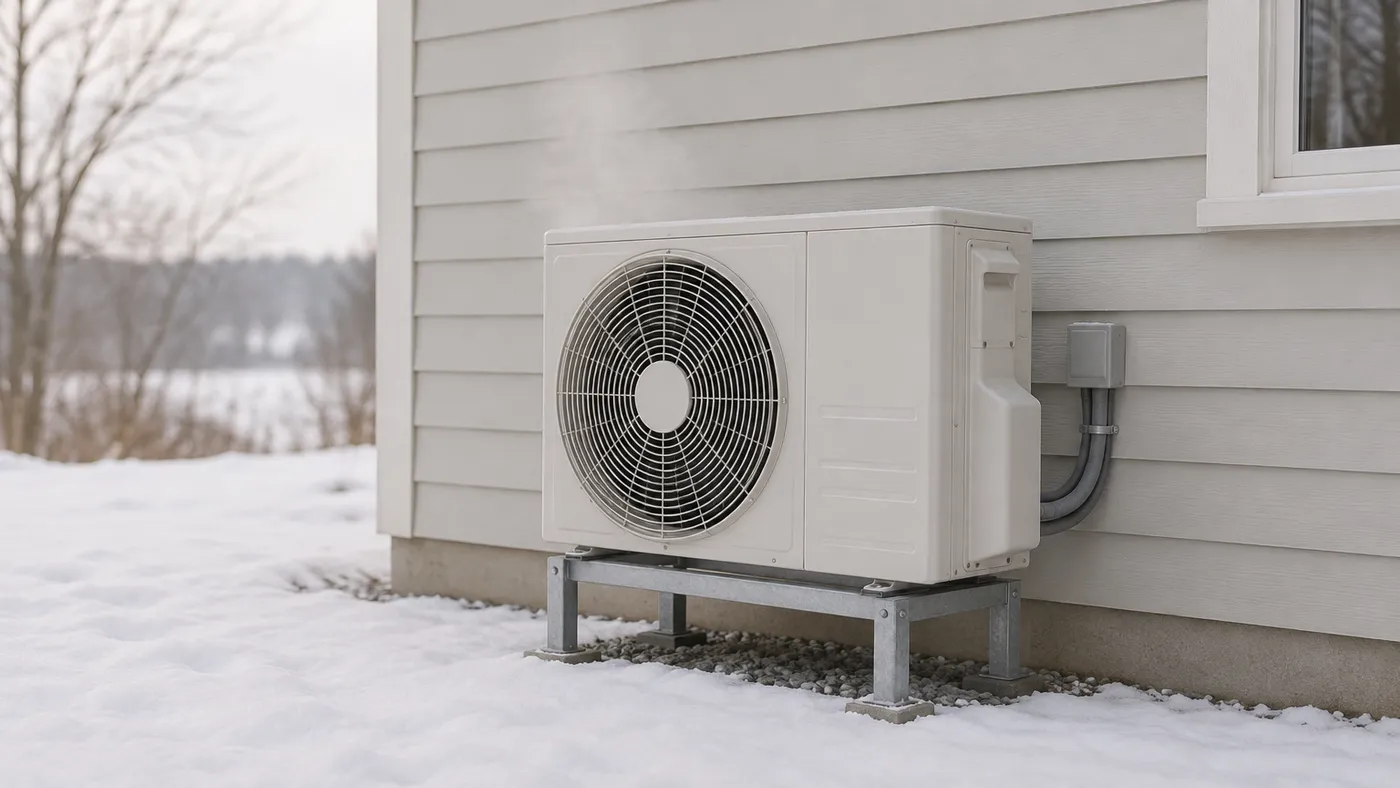 Heat Pump Not Heating or Blowing Cold Air? What to Check FirstHeat pump or mini-split blowing cool air this winter? See what normal defrost looks like, five checks to do yourself, and when to call a technician.
 Why Is My Electric Bill So High With a Heat Pump? (MA Checklist)A higher winter electric bill after a heat pump is partly normal. What is not, six checks you can do yourself, and how to get the Massachusetts heat pump rate.
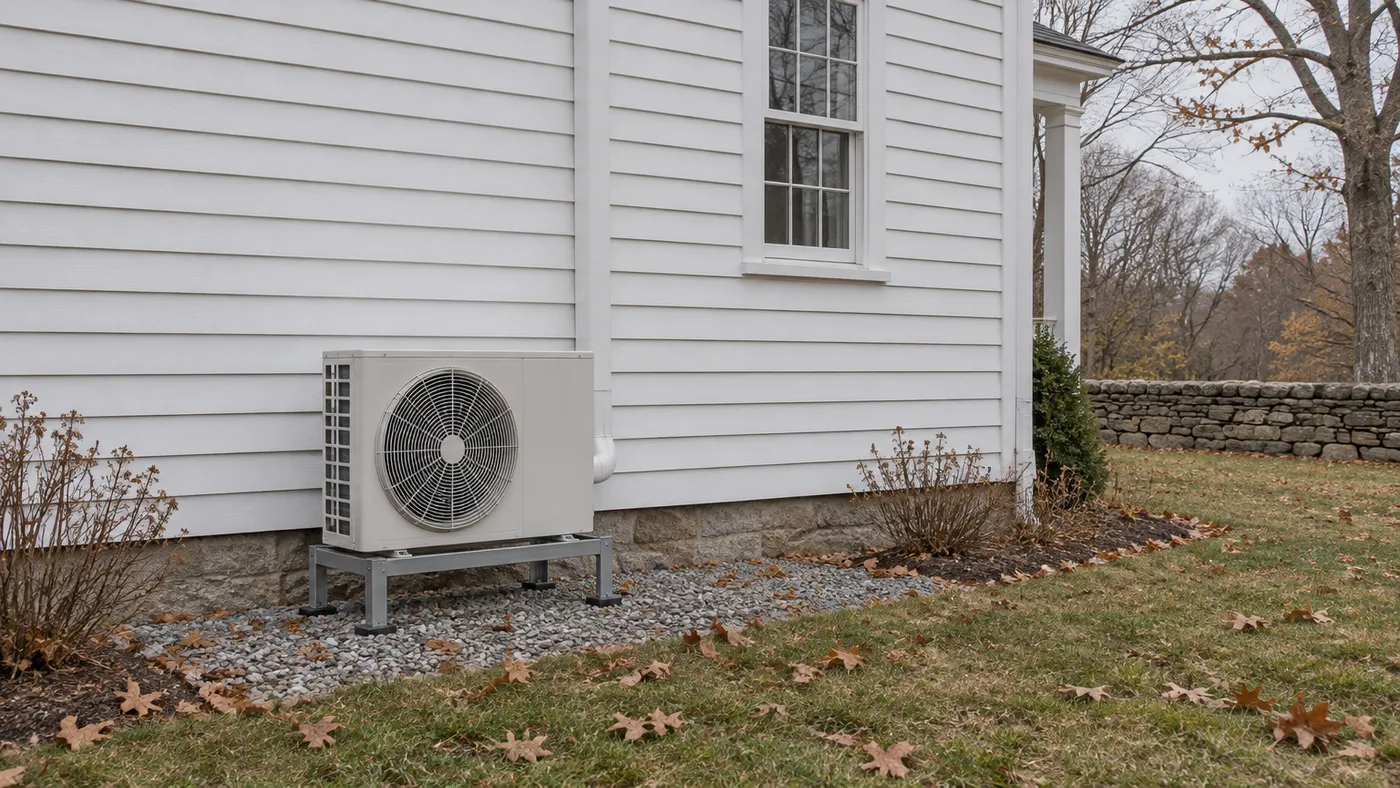 Are Heat Pumps Worth It in Massachusetts? The North Shore MathOil at $6 a gallon changes the math. What heat costs from a heat pump against oil, propane and gas, and the 2026 rebates by North Shore town.